The call to spiritual fatherhood
One of the most profound passages in the Gospel is the parable of the prodigal son. In this story we encounter not only two sons, but also the heart of God, our father.
One of the most profound passages in the Gospel is the parable of the prodigal son. In this story we encounter not only two sons, but also the heart of God, our father.
Often, we recognize something of ourselves in the two sons. The younger walks away from the father’s house, chasing freedom and fulfillment, only to discover that life apart from the father leads to hunger and restlessness. The elder son never leaves home yet remains distant in another way. He obeys, but his heart is closed. He serves, but he does not rejoice.
Both sons are lost. One through rebellion, the other through resentment. Yet the father goes out to meet them both.
This parable reveals something essential about God. His love is not earned. It is given. As St. Paul writes, we have not received “a spirit of slavery,” but “a spirit of adoption” through which we cry, “Abba, Father.” (Rom 8:15) We are not servants trying to earn wages. We are sons who have received an inheritance. That truth can take years to sink in.
I know it did for me.
In my 20s and early 30s, faith was not central in my life. I was busy building a career and pursuing the things I thought would fulfill me. Looking back, I can see that God was calling me, but I did not recognize it. Marriage and fatherhood began to change that. On my wedding day, standing beside my wife Kim at the altar, I sensed something stirring in my heart. Then, when I held our daughter Sophie for the first time, I experienced a kind of love that changed me. With that love came responsibility, not only to provide materially but to lead spiritually.
As our children began attending Catholic school, I found myself returning to Mass more regularly. Eventually I entered adult confirmation. During that time, the Gospel of the prodigal son struck me with particular force. I remember thinking: This is my story.
The story does not just end with the son returning home. It moves toward something deeper. Henri Nouwen wrote, “Though I am the son, I am called to become the father.”
This is the heart of spiritual fatherhood. God does not simply forgive and restore us. He invites us to become like him. Spiritual fatherhood is not merely about having children. It is a deeper identity that every man is called to grow into. It means becoming someone who nurtures life, protects others, offers mercy and creates space for healing.
Spiritual fatherhood does not begin with authority or expertise, it begins with presence. Our wives and children do not need us to fix every problem. More often, they need us to be there, to listen and to love them faithfully. Presence is one of the clearest ways a father reflects the heart of God.
Presence flows from prayer. St. Augustine wrote, “Our hearts are restless until they rest in you.” Many men know that restlessness well. We feel it in our desire to control outcomes, solve every problem or carry burdens on our own. Without prayer, a father can begin to rely on his own strength and effort. Prayer draws us back. It teaches us to listen and to trust, and it reminds us that our families do not need us to be their savior; they already have one in Christ.
If presence and prayer shape spiritual fatherhood, then humility sustains it. Humility means apologizing when we fail. It means not needing to win every argument. It means accepting that we are not called to be perfect but faithful. In family life, small acts of humility build trust, peace and love.
Our faith calls the family the domestic church because the home is often the first place where faith is encountered and passed on. That means spiritual fatherhood is lived in ordinary ways: listening attentively, praying with our children, blessing them, asking forgiveness and showing them by our lives that faith is not a Sunday obligation but a living relationship with God.
As men, we begin as sons who receive God’s mercy. Over time, by grace, we are invited to become fathers who extend that same mercy to others. And when that happens, the heart of God the father becomes visible again, in our homes, in our families and in the world.
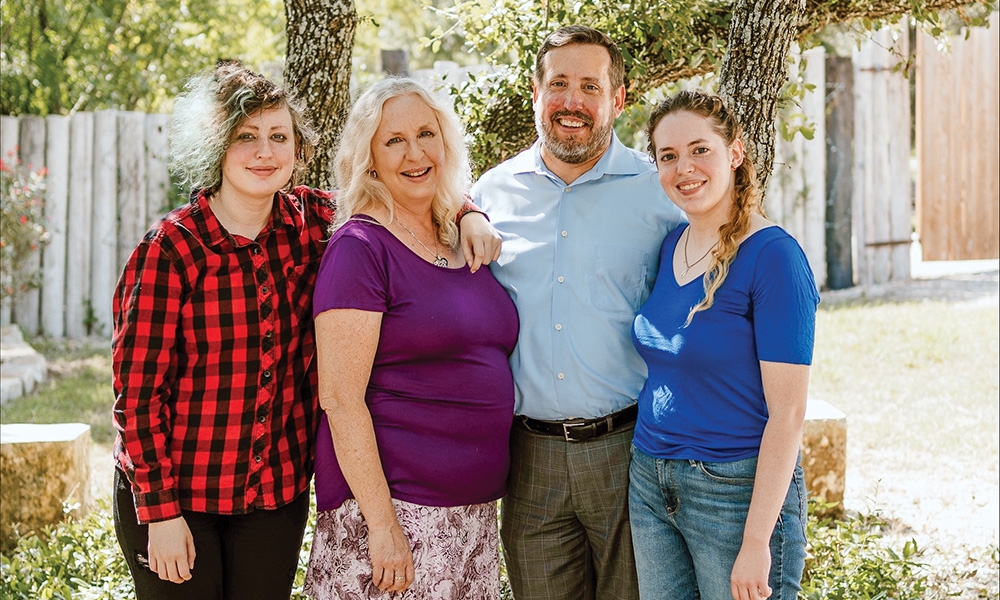
Deacon Peter Barger, ordained in 2019, was recently appointed to serve St. Helen Parish in Georgetown. He also serves as the director of the St. John Paul II Residence for Priests in Georgetown. Deacon Barger and his wife, Kim, have two adult daughters.