A look at the resurrection of the prodigal son
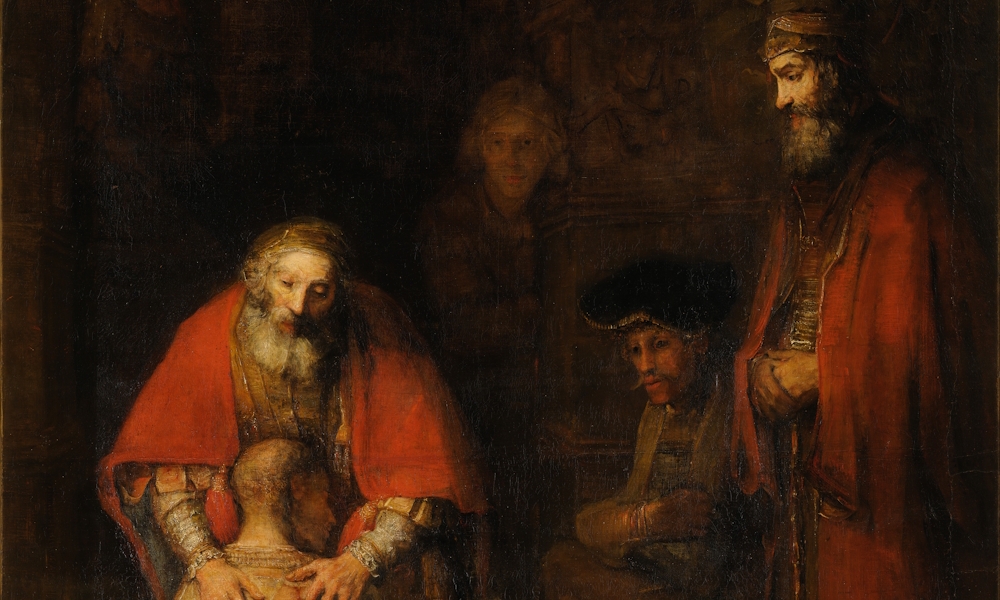
Rembrandt’s painting, The Return of the Prodigal Son, visually interprets Luke 15: 11-32 on a large scale (8’7” x 6’9”). Using strong contrast between light and dark (chiaroscuro), he creates a simple scene that focuses our attention on the characters rather than the setting. In fact, Rembrandt chose to create a setting that varied from Scripture. The father spied his son from a distance and ran to him, yet the setting has other people in close proximity. The older brother is present at the initial encounter. This is a master stroke by Rembrandt that allows us to feel the full impact of the parable. The focus is on the father and both sons.
The father is dressed in finery and the kneeling son is shaven, impoverished, dressed in filthy rags and worn sandals, with his head buried in his father’s chest. The knife and scabbard suggest he had ventured into dangerous territory by turning away from the father. The son had squandered the inheritance his father had given him on a dissolute life in a foreign country, but the father (God) has shown mercy and unconditional, unlimited love. The father’s right hand is feminine while his left hand is masculine, representing the fullness of this love.
We can read several different emotions into the son’s posture. One, he is still selfish and has returned simply to improve his situation; two, he is truly repentant and is feeling the full depth of remorse for his transgressions; or third, he is experiencing the inexhaustible, undeserved grace of forgiveness. Or all the above.
The older brother is stiffly erect on the right, looking down on his brother and father, standing in judgment of both. His brother has indeed sinned against their father, but the father is going against his very sense of justice. His hands are folded, holding a rod (punishment) and ruling on their wrongdoing. His right hand is dark while his left hand is light, referring to his harsh black and white stance. Rembrandt knew this was contrary to the direction the light is coming from (behind us, up and to the left) so his intention is clear. Later in the parable “... his father came out and pleaded with him ... My son, you are here with me always; everything I have is yours.” (Lk 15:28-31)
With both sons, the father went to meet them where they were. Both sons are invited home, to the banquet, to participate in the divine life, which is love. The younger son “…was dead and has come to life again: he was lost and has been found.” (Lk 15:32) His life is changed forever, without his earning it. Will the older brother come home to new life, able to find the joy that is offered him?
Rembrandt had suffered many losses in his life, including bankruptcy and the deaths of three children and his beloved wife. This painting was one of his last, and from reading his biography, I suspect the power we viewers feel from the painting was because Rembrandt could identify with and put himself into all three characters.
Mark Landers is a parishioner of St. Austin Parish in Austin and a member of the Diocesan Fine Arts Council. He and his wife, Christina, own and operate Landers’ Studio, a woodworking shop and design studio. They design and construct custom furniture and high-quality architectural piecework.