16th century saint sought to help people love the liturgy
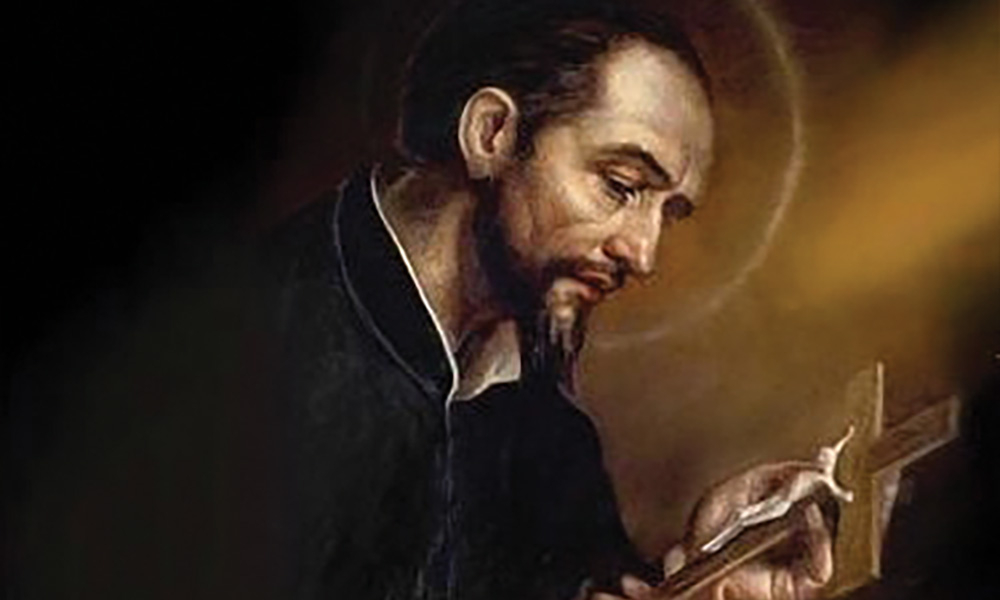
Anthony Mary Zaccaria was 2 when his father, Lazzaro, died in 1504 in Cremona, Italy. His mother, Antonia Pescaroli, devoted the rest of her life to her son and his education. Rosemary Ellen Guiley writes in “The Encyclopedia of Saints” that his mother also taught him compassion for the suffering and destitute.
Anthony Mary Zaccaria was 2 when his father, Lazzaro, died in 1504 in Cremona, Italy. His mother, Antonia Pescaroli, devoted the rest of her life to her son and his education. Rosemary Ellen Guiley writes in “The Encyclopedia of Saints” that his mother also taught him compassion for the suffering and destitute.
He studied medicine at the University of Padua and earned his doctorate at 22. He served as a doctor in his hometown of Cremona for a time before he began studying theology and ministering to the poor and sick, shifting from physical to spiritual healing. He began teaching catechism to both children and adults from the small church of St. Vitalis, next to his mother’s home. During his service in prisons and hospitals during the plague of 1528, the citizens of Cremona began calling him an apostle.
It was under the influence of the Dominicans that he became a priest and was ordained in 1528. Just two years later, together with two Milanese noblemen, Anthony Mary founded an order of priests to regenerate the love of the liturgy. Richard McBrien writes in Lives of the Saints that he encouraged frequent preaching with an emphasis on the writings of St. Paul. The order received formal approval in 1533 from Pope Clement VII and adopted the name of Clerks Regular of St. Paul. The Congregation started with five members and soon gained a reputation for preaching with stress on Our Lord’s redeeming passion and pastoral work.
According to Guiley, the group wanted to establish three religious families within the community: priests, sisters and lay people. All three families shared the same zealous mission for reform and preaching encouraging daily Communion, penitence and service to the sick and poor.
Louisa Torelli, the Countess of Guastella, worked with Anthony to found a woman’s Congregation dedicated to helping women in danger of falling into prostitution. Paul Burns writes in Butler’s Lives of the Saints that Anthony introduced the custom of ringing the church bells at 3 p.m. every Friday to commemorate the death of Christ and spread the Milanese practice of exposing the Blessed Sacrament for three days of devotion.
According to McBrien, the order encountered opposition from local clergy because of the reforms it tried to introduce, but Rome stood behind it. The Clerks were twice reported to Rome for heresy. A vigorous preacher, Anthony Mary, did not endear himself to everyone, but this is what he wrote in response: “We should love and feel compassion for those who oppose us, since they harm themselves and do us good ...” (Woodene Koenig-Bricker, 365 Saints)
He organized conferences for the clergy, established associations for married people, preached in the open air and ministered to the sick. McBrien writes that his spirituality was based on devotion to the Eucharist and the Passion of Christ.
In the last year of his life, Anthony began negotiations to make the church of St. Barnabas in Milan the headquarters of his order. That is why its members became known as Barnabites. He died on July 5, 1539, at his mother’s house in Cremona.
After his death, the order grew steadily but never became very large according to Burns. Barnabite priests work among the poorest of the poor in France, Germany, Belgium and South America. The first house in North America was established in Buffalo, New York, in 1952.
Anthony Mary was canonized in 1897 by Pope Leo XIII. His feast day is July 5.
Mary Lou Gibson is a freelance writer who loves to explore the lives of saints. She is a member of St. Austin Parish in Austin.