Benedict and Scholastica were saintly siblings
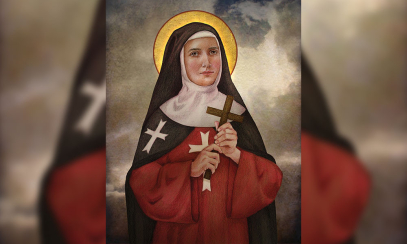
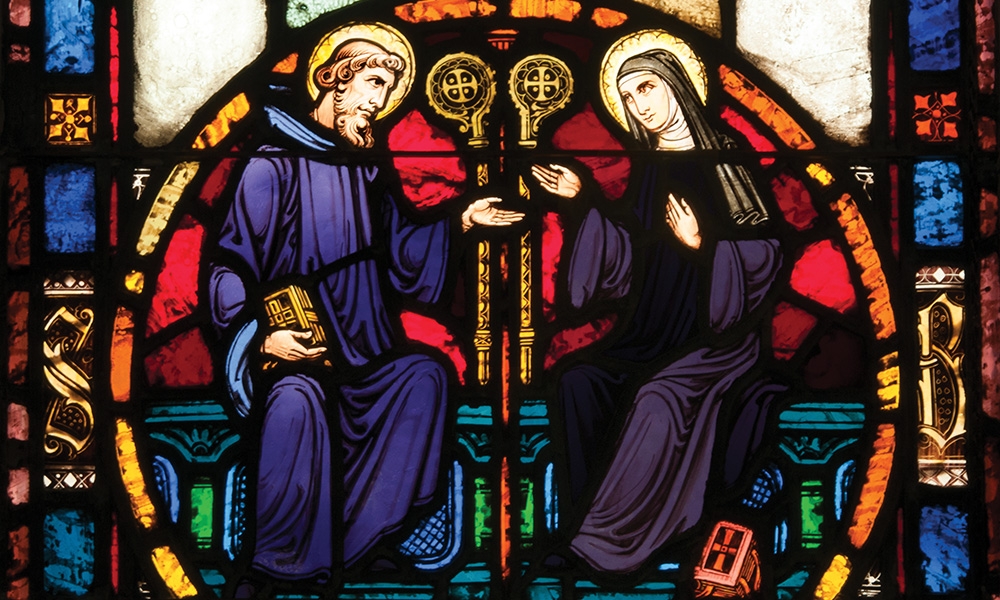
Among the thousands of canonized saints there are a special few who share a family connection. The most famous of these are the brother-sister saints, St. Benedict and St. Scholastica. They were immortalized by St. Gregory the Great in his Dialogues, which he wrote some 40 years after Benedict’s death in 547.
Among the thousands of canonized saints there are a special few who share a family connection. The most famous of these are the brother-sister saints, St. Benedict and St. Scholastica. They were immortalized by St. Gregory the Great in his Dialogues, which he wrote some 40 years after Benedict’s death in 547.
Some biographers state they were fraternal twins born in 480 into a wealthy family in Norcia, Italy. They were brought up together until they were 14, when Benedict left for Rome to pursue his studies.
Scholastica dedicated herself to God at a very early age. Not much is known of her early life. A young Roman woman of Scholastica’s class would likely have remained in her father’s house until she married or entered consecrated life.
Benedict spent years on a spiritual journey that ended at Monte Cassino, where he established his monastery. It was Scholastica’s lifelong conviction that sanctity is a matter of willpower, and with her brother’s help, she founded a convent some five miles from Monte Casino in Plombariola. According to Rosemary Guiley writing in the Encyclopedia of Saints, Benedict directed his sister and her nuns. This was the first convent of Benedictine nuns.
Scholastica visited her brother only once a year because that was Benedict’s rule. Sarah Gallick writes in The Big Book of Women Saints that they would meet at a small cabin outside Monte Cassino. Benedict and several of his brothers would meet her there and spend the day in prayer and spiritual conversation. After many years of such meetings, Scholastica had a premonition that the current one was going to be her last.
Paul Burns writes in Butler’s Lives of the Saints that Scholastica begged her brother to stay the night so that they might continue their conversation. He replied that his Rule made this absolutely impossible and that he had to return to the monastery.
Scholastica bowed her head in prayer, whereupon such a violent thunderstorm broke out that Benedict could not leave the house. He accused her of provoking this, and she replied, “I asked a favor of you, and you refused it. I asked it of God, and he has granted it.”
They spent the night talking about the joys of heaven. It was the last time they met. Three days later when Benedict was sitting in his cell, he saw her soul rising to heaven in the form of a dove. He sent monks to collect her body, which was placed in a tomb he had had prepared. When Benedict died four years later, he was buried with her.
The tomb still survives at Monte Cassino despite the destruction of the monastery by Allied bombardment in 1944.
Scholastica is the patron saint of Benedictine sisters. She is invoked against storms and lightning. Her feast day is Feb. 10. Benedict is the father of Western monasticism and the patron saint of Europe.
A private Benedictine college in Duluth, Minnesota, is called the College of St. Scholastica. It was founded in 1912 by a group of Benedictine sisters.
Mary Lou Gibson is a freelance writer who loves to explore the lives of saints. She is a member of St. Austin Parish in Austin.