Context matters
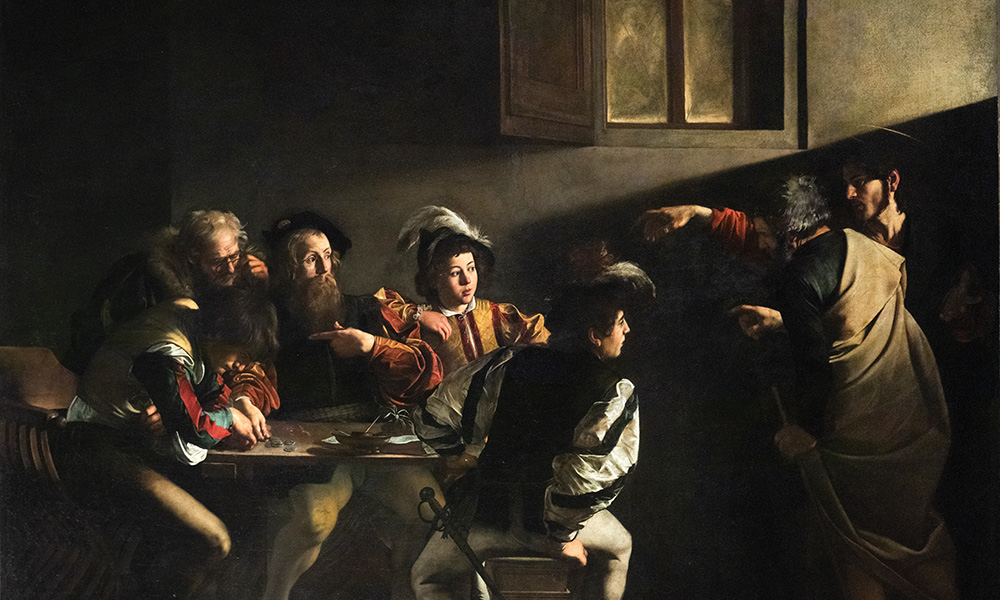
When you look at Caravaggio’s painting “The Calling of St. Matthew,” it helps to know that it hangs in the Contarelli Chapel in Rome and was one of Pope Francis’ favorite paintings, but the title alone ensures a Christian perspective. Were it hanging in a courthouse and the title were “That’s Him, Officer,” a wholly different interpretation would be appropriate. Interestingly, a 16th century Italian would recognize the clothing, hats, shoes, etc. as modern, thus making it more relatable and immediate, though not historically accurate.
When you look at Caravaggio’s painting “The Calling of St. Matthew,” it helps to know that it hangs in the Contarelli Chapel in Rome and was one of Pope Francis’ favorite paintings, but the title alone ensures a Christian perspective. Were it hanging in a courthouse and the title were “That’s Him, Officer,” a wholly different interpretation would be appropriate. Interestingly, a 16th century Italian would recognize the clothing, hats, shoes, etc. as modern, thus making it more relatable and immediate, though not historically accurate.
Similarly, Leonardo’s “The Last Supper” hangs in the refectory of a convent and is one of the most universally recognized paintings in Western art, but it has many glaring errors. It is daylight in the painting (Seder begins after sunset), there is a yeasty loaf (not unleavened matzah), there is fish (not lamb), Jesus is wearing Western European clothing (not the white robe the Seder leader would wear) and the apostles would have worn prayer shawls and skullcaps. Additionally, there are no wine pitchers, and first-century Middle Eastern Jews would have been reclining at a low, probably u-shaped table. But again, 15th century Italians were comfortable seeing the Last Supper depicted in a modern setting, and 500 years later we seem to have no problem because it looks “right” to us.
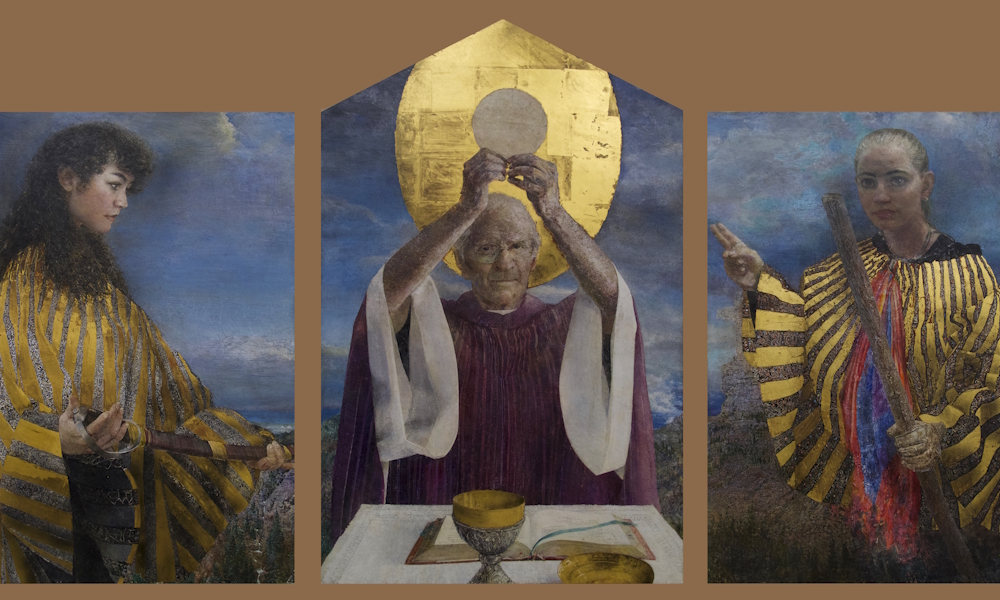
Look now at the triptych titled “True Food, True Drink” by local artist John Cobb. I won’t tell you the saint’s name, but I will tell you he was alive during Christ’s time. We know he is a saint because of the gold leaf halo, but what are our iconographic clues to his identity? He is balding, Scripture is represented by both the lectionary and the host (Word made flesh), the angel on the left is holding a sheathed sword (which can imply persecution, zeal or both) and the angel on the right is holding a staff (which can imply a journey or mission). Interestingly, the angel holding the staff is gloved, which implies the sacredness of the journey or mission. Spoiler alert: It is St. Paul.
So, what is happening here? Generally, an artist controls their subject matter, its treatment, materials and technique, but they cannot control the viewer’s response to the art. However, if they can capture the essence, the deeper truth of something, they can point the viewer in the right direction. This is somewhat easier with religious art because there is more of a common basis for interpretation.
By only looking at St. Paul’s story as happening long ago, we insulate ourselves from rather than engage ourselves in the deeper story that we are part of. What would St. Paul look like and what would he be doing were he alive today? Contemplating Cobb’s contemporary treatment gives an immediacy and coherence to the divine, cosmic story of Christ and our part in it. Our ordinary lives come full circle with St. Paul’s teachings and Jesus’ gift of his true presence and, yes, even angels. Conversion is a process we are called into, not a static comfort zone. Sacred art should shift our perspectives and what we think we know, challenge our understanding of our faith and transform us.
Mark Landers is a parishioner of St. Austin Parish in Austin and a member of the Diocesan Fine Arts Council. He and his wife, Christina, own and operate Landers’ Studio, a woodworking shop and design studio. They design and construct custom furniture and high-quality architectural piecework.