Despite temptation, St. Flora never stopped praying
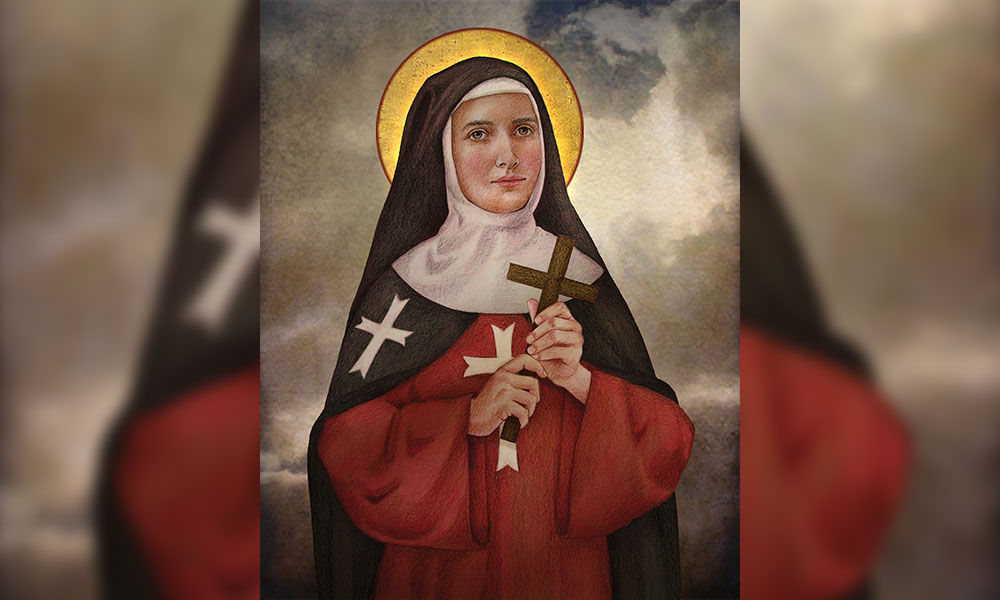
In the early 1300s a French contemplative nun found divine intimacy during prayer in her convent cell. Flora of Beaulieu was granted many unusual and mystical favors during her years at the Priory of Beaulieu of the Hospitalier nuns of St. John of Jerusalem. Flora is one of the few medieval female saints associated with this order.
In the early 1300s a French contemplative nun found divine intimacy during prayer in her convent cell. Flora of Beaulieu was granted many unusual and mystical favors during her years at the Priory of Beaulieu of the Hospitalier nuns of St. John of Jerusalem. Flora is one of the few medieval female saints associated with this order.
Born about 1300 into a noble family in Auvergne, France, Flora was a devout child, and she resisted all attempts on the part of her parents to find a husband for her. At 14, she entered the priory where silence, simplicity and prayer shaped daily life.
After a short while she fell into a depressed state when she experienced temptations of the devil. Sarah Gallick writes in The Big Book of Women Saints that the devil told her he would make her life so miserable that she would give up all hope of salvation. The more the devil tempted her, the more she prayed. Her intense depression showed itself in her countenance and behavior.
This irritated some of the other nuns who regarded her as insane or foolish, but Flora reminded herself that her misery was nothing compared to what Jesus suffered for sinners like her. Michael Walsh, editor of Butler’s Lives of the Saints, writes that she got occasional help from a visiting confessor who seemed to understand her state.
She never ceased to find favor with God and over the years was granted many unusual and mystical favors. Reverend Hugo Hoever writes in Lives of the States that one year on the feast of All Saints, she fell into an ecstasy and took no nourishment until three weeks later on the feast of St. Cecilia.
Another time, while meditating on the Holy Spirit, she was raised four feet from the ground and hung in the air in full view of many onlookers. She also seemed to be pierced with the arms of Our Lord’s cross, causing blood to flow freely at times from her side and from her mouth.
She was also given prophetic knowledge of matters that she could not naturally know. Flora remained humble and in complete communion with the Lord, giving wise counsel to all who flocked to her because of her holiness and spiritual discernment.
Some witnesses said her face sometimes glowed during prayer and that visions of Christ and the Virgin Mary consoled her. As a contemplative nun, she spent her days praying especially for the patients and staff of the order’s large hospital at Beaulieu.
She was never known for preaching or worldly deeds; her sanctity bloomed in silence. Guerric of Igny writes of Flora, “To be unknown of men but known of God — this is the soul’s greatest freedom.”
Flora died in 1347 in the odor of sanctity, surrounded by the fragrance of roses and lilies, Gallic writes. This was also noted around her tomb, which became the site of more than a hundred miracles attributed to her.
Her convent and hospital were destroyed during the Revolution, but her relics were saved and are venerated at Issendolus. Flora is the patron of abandoned women and victims of betrayal. Her feast day is Oct. 5.
Mary Lou Gibson is a freelance writer who loves to explore the lives of saints. She is a member of St. Austin Parish in Austin.