Helen Osman is appointed to Vatican board
Vatican City is nearly 6,000 miles from Central Texas, but one person in the Diocese of Austin has a foot in both places.
Vatican City is nearly 6,000 miles from Central Texas, but one person in the Diocese of Austin has a foot in both places.
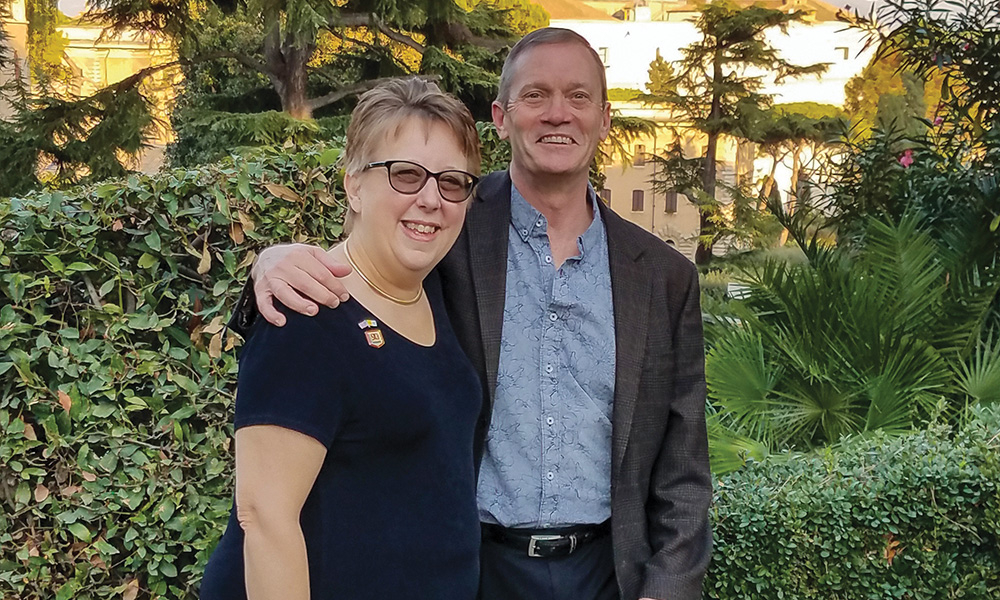
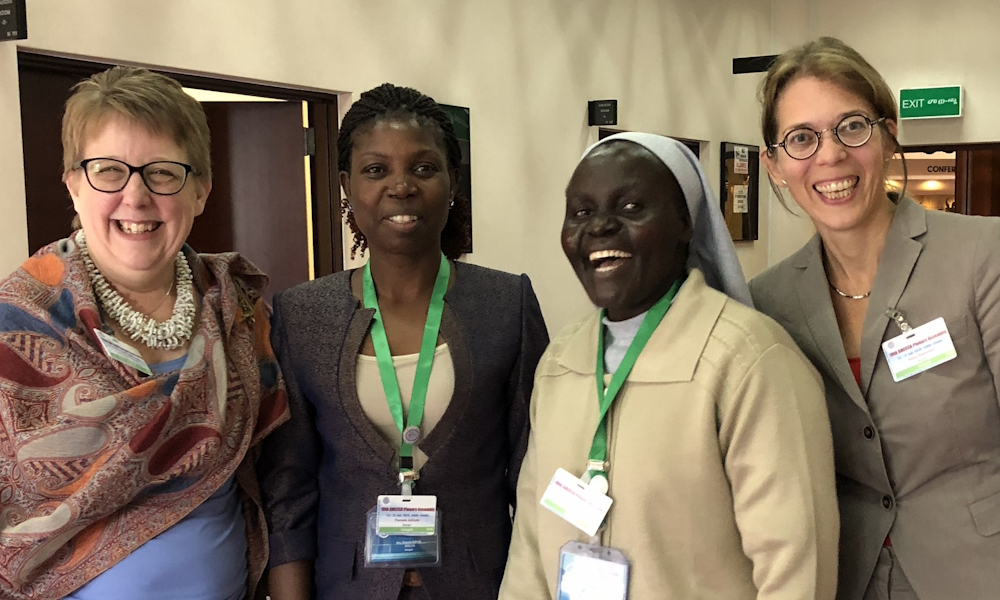
This year Pope Leo XIV appointed Helen Osman, a Cedar Park resident and former director of communications for the Diocese of Austin, to serve on the board of the Dicastery of Communications at the Vatican.
Osman said she felt honored and humbled by the appointment, and found herself asking, “Why me?”
“I think it was Francis of Assisi, who said, ‘Let me be an instrument,’ and that's a good prayer for me,” she said.
Austin to Rome
Osman travels to Vatican City when her superiors call, staying at pilgrim hotels run by the Diocese of Rome or religious orders. Her advisory appointment is unpaid and akin to serving on a pastoral council. However, the Dicastery of Communications has one of the largest numbers of employees in the Curia and is one of only two of the 16 dicasteries to have a lay person serving as leader. Prefect Paolo Ruffini will be replaced by Montse Alvarado of EWTN starting in November.
Osman has gotten to shake hands with Pope Leo one time and said her appointment came from recommendations rather than personal knowledge. She became well known as Secretary of Communications for the United States Conference of Catholic Bishops (USCCB), where she coordinated media access to papal visits for Pope Benedict and Pope Francis.
“It is a monumental effort for the pope to visit a country,” she said. “We had five thousand journalists who were credentialed for Pope Benedict’s visit, and for Pope Francis, it was maybe seven or eight thousand. That's a lot of work!”
Osman was able to meet Pope Francis three times, including once only a few months before he passed away in April 2025. She feels blessed to have seen three popes from a unique vantage point.
“They're all different, and that’s the beauty,” she said. “They bring their faith and their experience to the office, and I see the Holy Spirit at work in all of that.”
She also sees how Americans are responding to Pope Leo. “He feels very approachable, right? We're in the flesh, so even hearing him in a Midwestern accent tells us something,” she said. “We drop the artificial barriers that we might have had toward other popes because they were from another place.”
As many Americans are enamored, Osman is, too. “Every time I hear him talk, I’m like, yeah, he's from Chicago. And then I hear about his family being from Louisiana, and his family tree, and it's like, yes, this is just like everyone I know in America!”
Faith and media
Pope Leo’s appointment makes Osman a bridge between the Vatican and those she serves in her other volunteer position as the president of SIGNIS, a worldwide media association with a diverse membership that includes groups like the USCCB, the United Nations, Catholic filmmakers, and even secular journalists who are allowed to publicly claim a bias. “For instance,” she said, “in Korea, the national television networks allow clubs, so there's a club of Catholic employees.”
She said some dioceses join SIGNIS to have the church fund improved communication for their impoverished nations. “In those parts of the world, radio stations provide reflections on Scripture and the Mass, but they also provide information on health. Some of them actually provide education if it's a country where kids can't go to school.”
Osman said the media helps with faith and human flourishing as well as the arts. “They have these big film festivals, and we participate or we help form a faith-based film jury and offer awards. So that's a way of interacting with secular content creators. It's affirmation of those who are providing human values in their films,” she said.
“Catholic media is a lot bigger than average Catholics know, but it's always been our tradition. Look at the Sistine Chapel,” she said. “Michelangelo did that because he was Catholic but also because he was a great artist!”
Osman said SIGNIS just had its World Congress in Rwanda, and one project has been to help religious sisters gain media access in Africa, Asia and Latin America. She hopes journalists can tell interesting stories that impact people while also increasing trust in the Catholic Church.
“We read in Scripture about Jesus healing people,” she said. “We're still healing people today by bringing water to a village or helping children learn to read and write, but how do we tell that story?”
This global outlook is a different way of seeing the media than the political polarization common to the U.S.
“The meaning of ‘left’ and ‘right’ is different in other places,” Osman said. “I think we have the luxury in North America and Europe, to be polarized over politics. In many parts of the world, it's the discrepancy of wealth. It's more about the rich and the powerful, and then everyone else.”
While Catholicism doesn’t work to evangelize the media per se, Osman said the media have an implied invitation to find Christ. “I cannot help but think that people who cover faith leaders on a full-time basis absolutely are affected by it. Maybe they're not sitting down and reflecting on Scripture every day. But their lens of coverage is through what the Holy See is doing. And that has to affect you.”
At home in Cedar Park
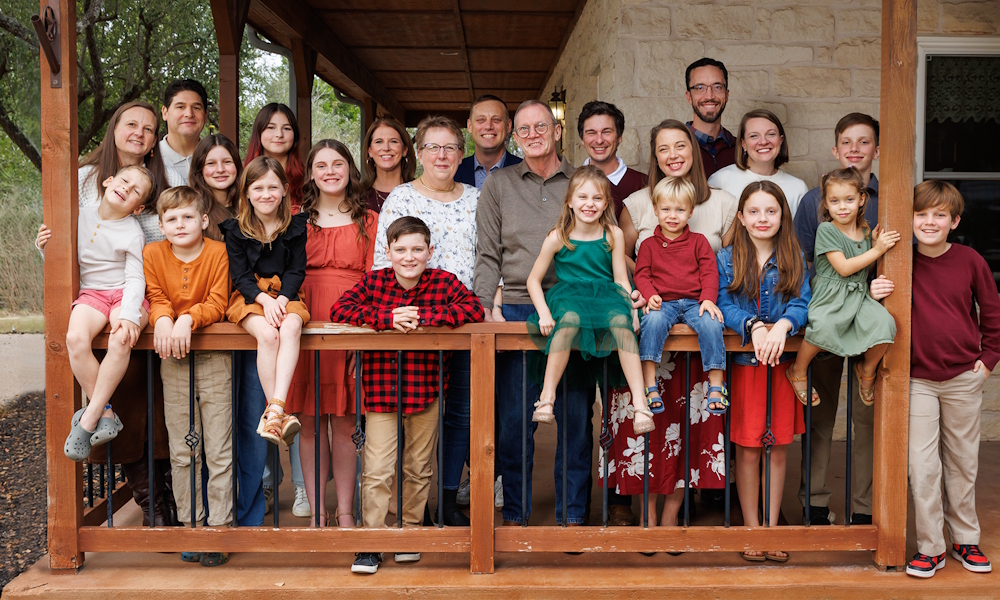
Osman gets to see the way the global media works from Rome, loves to visit less touristy areas and enjoys seafood prepared in the Mediterranean ways. However, home is in Central Texas. When Osman returns, she works at her regular job, a consulting firm called Greater Wings, and she attends Mass at her home parish, St. Thomas More in Austin. She and her husband, John, have four adult children and 13 grandchildren. She has a local faith-sharing group where she contributes things she has learned.
Such was the case with Pope Leo’s recent encyclical Magnifica Humanitas. Osman attended the roll out of the encyclical at the Vatican, and she brought home with her the idea that Pope Leo wants all interested persons at every level to read the encyclical and talk about it.
“This is something that's impacting our life, I mean, how is it impacting our humanity? I think this is the real question Pope Leo's asking us to think about,” she said.
Osman knows there are church leaders, consumers, and tech leaders in Austin who could bring great conversations about artificial intelligence into something sacramental. “Pope Leo is not talking about the sacrament of reconciliation, but he is! What does it mean to be in right relationship with people?”
Osman is excited to find ways to bring the conversation from beyond her St. Thomas More faith-sharing group to the diocese as a whole. “The only way you're going to influence somebody is if you understand where they're coming from. I mean, that would be a tremendous conversation for people here. It's Silicon Hills!”
Osman said Pope Leo is inviting conversation in the synodal pattern of Pope Francis. And that means everyone in the Austin Diocese can have a foot in Rome as well.
Norine Shaivitz is wife of Adam and mom of two daughters, Abby and Hannah. Norine might be found praying in any of the North Austin Deanery adoration chapels, searching new finds in grocery stores or belting out worship tunes in her minivan.